CUSTOMERS ACQUISITION STRATEGIES
The Complete Guide to Attracting, Converting, and Retaining Customers for Business Growth
In today's competitive business landscape, having a great product or service is no longer enough. Businesses that thrive are those that consistently attract, convert, and retain customers through effective customer acquisition strategies. Whether you're a startup founder, a small business owner, or managing an established enterprise, understanding how to acquire customers efficiently can determine the long-term success of your business.
Customer acquisition is more than simply generating sales. It's about creating a repeatable and scalable process that brings the right customers into your business ecosystem while maximizing profitability and building sustainable growth.
In this comprehensive guide, we'll explore what customer acquisition is, why it matters, and the most effective customer acquisition strategies that businesses can implement to drive growth and increase revenue.
## What Is Customer Acquisition?
Customer acquisition refers to the process of attracting potential customers, converting them into paying customers, and nurturing them into loyal advocates of your brand. It encompasses every interaction a prospect has with your business—from discovering your brand for the first time to making a purchase and beyond.
A successful customer acquisition strategy involves understanding your target audience, selecting the right marketing channels, creating compelling offers, and optimizing the customer journey to maximize conversions.
The customer acquisition process typically includes:
* Creating awareness
* Generating interest
* Building trust
* Converting prospects into customers
* Retaining customers for long-term value
The ultimate goal is not simply acquiring customers but acquiring profitable customers who contribute positively to your business growth.
## Why Customer Acquisition Matters
Without a reliable customer acquisition strategy, businesses struggle to grow consistently. Even companies with excellent products can fail if they cannot attract and convert enough customers.
Effective customer acquisition provides several key benefits:
### Sustainable Revenue Growth
New customers fuel business expansion and create opportunities for increased market share.
### Improved Brand Awareness
Strategic acquisition campaigns expose your business to larger audiences and strengthen brand recognition.
### Competitive Advantage
Businesses with efficient acquisition systems can outperform competitors by reaching customers faster and more effectively.
### Increased Customer Lifetime Value
A strong acquisition strategy focuses on attracting customers who are more likely to become repeat buyers and loyal brand advocates.
### Better Business Forecasting
Predictable customer acquisition allows businesses to estimate revenue growth and allocate resources more effectively.
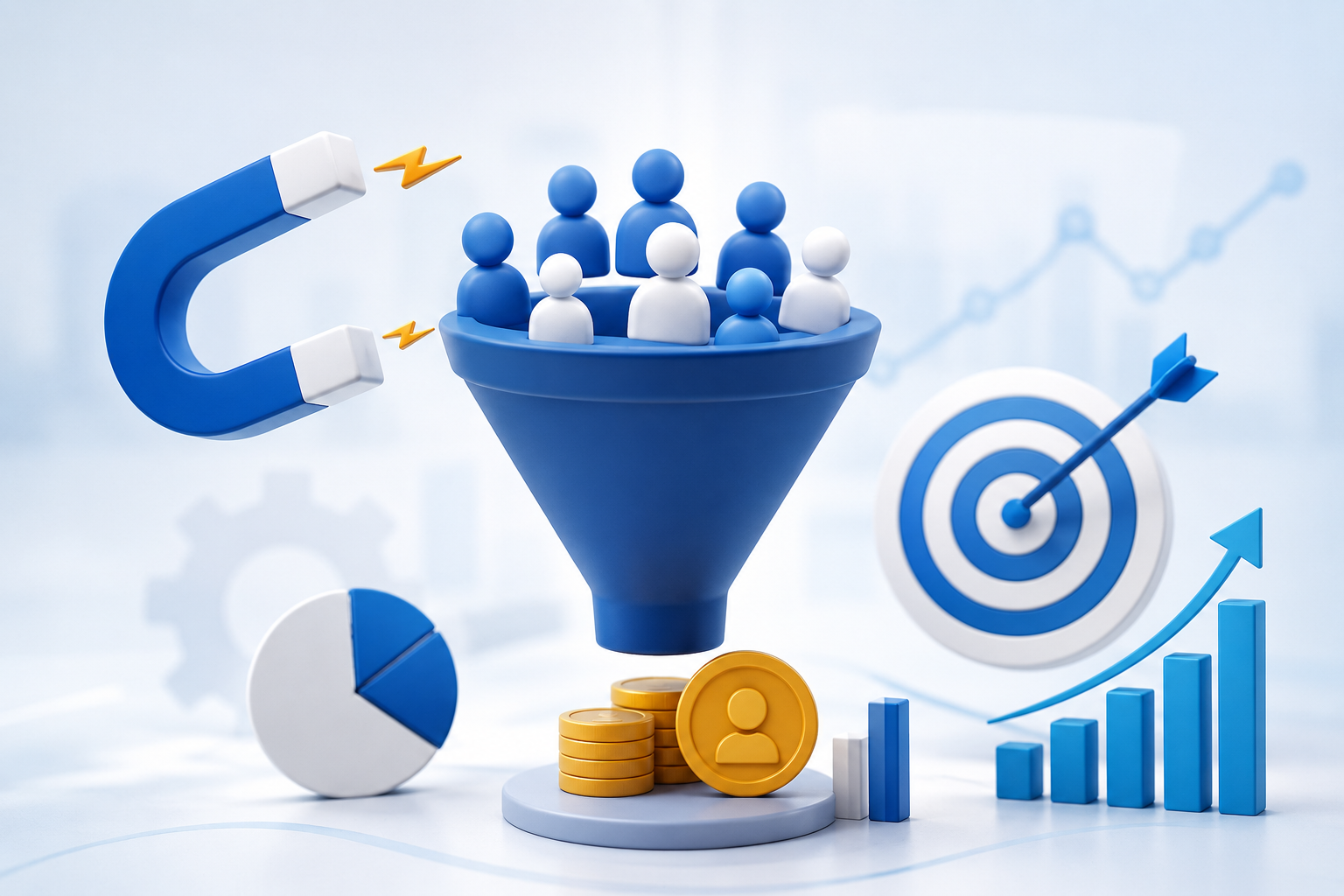
## Understanding the Customer Acquisition Funnel
Before implementing acquisition strategies, businesses must understand the customer acquisition funnel.
### Awareness Stage
At this stage, potential customers become aware of your brand through advertising, social media, search engines, referrals, or content marketing.
### Consideration Stage
Prospects evaluate your products or services and compare them with alternatives available in the market.
### Conversion Stage
Potential customers decide to purchase your product or service.
### Retention Stage
Businesses nurture customers after the purchase to encourage repeat business and loyalty.
### Advocacy Stage
Satisfied customers become promoters who recommend your business to others.
Understanding this journey helps businesses create targeted marketing campaigns that guide customers through every stage of the buying process.
# Top Customer Acquisition Strategies for Business Growth
## 1. Content Marketing
Content marketing remains one of the most effective and cost-efficient customer acquisition strategies available today.
By creating valuable, educational, and engaging content, businesses can attract prospects organically while establishing authority within their industries.
Examples of content marketing include:
* Blog articles
* Videos
* E-books
* Case studies
* Whitepapers
* Webinars
* Infographics
* Podcasts
### Why Content Marketing Works
Customers rarely make purchasing decisions immediately. They research solutions, compare providers, and seek trustworthy information before committing.
High-quality content helps businesses:
* Build trust
* Improve search engine visibility
* Generate qualified leads
* Establish industry authority
* Reduce acquisition costs over time
### Best Practices
* Focus on solving customer problems.
* Publish content consistently.
* Optimize content for search engines.
* Include strong calls to action.
* Repurpose content across multiple platforms.
## 2. Search Engine Optimization (SEO)
Search Engine Optimization is the process of improving your website's visibility in search engine results.
When potential customers search for products or services related to your business, appearing on the first page of search results can significantly increase traffic and conversions.
### Benefits of SEO
* Generates long-term organic traffic
* Reduces dependency on paid advertising
* Builds credibility and trust
* Produces high-quality leads
* Delivers excellent return on investment
### Key SEO Strategies
#### Keyword Research
Identify the search terms your target audience uses and create content around those topics.
#### On-Page Optimization
Optimize:
* Titles
* Meta descriptions
* Headers
* Images
* Internal links
* Website structure
#### Technical SEO
Improve:
* Website speed
* Mobile responsiveness
* Security
* User experience
#### Link Building
Acquire quality backlinks from authoritative websites to improve search rankings.
SEO requires patience, but businesses that invest consistently often achieve substantial long-term customer acquisition benefits.
## 3. Social Media Marketing
Social media platforms provide businesses with direct access to billions of potential customers worldwide.
Effective social media marketing helps businesses:
* Build brand awareness
* Generate leads
* Engage customers
* Drive website traffic
* Increase sales
### Popular Social Media Platforms
Different platforms serve different audiences:
* Facebook
* Instagram
* LinkedIn
* TikTok
* X (Twitter)
* YouTube
* Pinterest
### Successful Social Media Strategies
#### Create Valuable Content
Provide educational, entertaining, and engaging content rather than constant promotional messages.
#### Build Communities
Encourage discussions, interactions, and customer participation.
#### Use Paid Advertising
Social media advertising allows precise targeting based on demographics, interests, and behavior.
#### Collaborate with Influencers
Influencer partnerships can significantly expand your reach and credibility.
Consistency and authenticity remain the keys to successful social media customer acquisition.
## 4. Pay-Per-Click (PPC) Advertising
PPC advertising enables businesses to acquire customers quickly by placing targeted advertisements on search engines and digital platforms.
Unlike organic marketing, PPC generates immediate visibility and traffic.
### Advantages of PPC
* Instant traffic generation
* Precise audience targeting
* Measurable results
* Flexible budgeting
* Fast optimization opportunities
### Popular PPC Channels
* Search advertising
* Display advertising
* Social media advertising
* Video advertising
* Remarketing campaigns
### PPC Best Practices
* Target high-intent keywords.
* Create compelling ad copy.
* Optimize landing pages.
* Test multiple campaigns.
* Monitor performance continuously.
When managed effectively, PPC can become one of the fastest methods of acquiring qualified customers.
## 5. Email Marketing
Email marketing continues to deliver one of the highest returns on investment among all digital marketing channels.
It allows businesses to nurture prospects, build relationships, and convert leads into customers through personalized communication.
### Effective Email Campaign Types
* Welcome sequences
* Educational newsletters
* Promotional campaigns
* Product announcements
* Abandoned cart reminders
* Customer retention campaigns
### Benefits of Email Marketing
* Low acquisition cost
* Personalized communication
* High conversion rates
* Measurable performance
* Strong customer relationships
### Email Marketing Best Practices
* Segment your audience.
* Personalize messages.
* Write compelling subject lines.
* Provide valuable content.
* Include clear calls to action.
Businesses that consistently deliver value through email often achieve exceptional customer acquisition results.
## 6. Referral Marketing
People trust recommendations from friends, family, and colleagues more than traditional advertising.
Referral marketing leverages existing customers to acquire new customers.
### Why Referral Marketing Works
Referrals:
* Build immediate trust
* Lower acquisition costs
* Generate higher-quality leads
* Increase customer retention
* Improve conversion rates
### Creating an Effective Referral Program
Offer incentives such as:
* Discounts
* Cash rewards
* Free products
* Service upgrades
* Exclusive benefits
Successful referral programs make sharing easy and reward both the referrer and the new customer.
## 7. Influencer Marketing
Influencer marketing involves partnering with individuals who have established audiences and credibility within specific niches.
Rather than building trust from scratch, businesses leverage existing relationships influencers have with their followers.
### Benefits of Influencer Marketing
* Increased credibility
* Expanded reach
* Better engagement
* Higher conversion rates
* Stronger brand awareness
### Choosing the Right Influencers
Consider:
* Audience relevance
* Engagement rates
* Authenticity
* Content quality
* Brand alignment
Micro-influencers often provide better engagement and higher returns than celebrity influencers due to their closer relationships with followers.
## 8. Video Marketing
Video content has become one of the most powerful customer acquisition tools available.
Consumers increasingly prefer watching videos over reading lengthy text content.
### Types of Effective Video Content
* Product demonstrations
* Educational tutorials
* Customer testimonials
* Explainer videos
* Behind-the-scenes content
* Live streams
### Benefits of Video Marketing
* Higher engagement
* Improved trust
* Better conversion rates
* Increased social sharing
* Stronger emotional connection
Businesses that incorporate video into their acquisition strategies often experience significant improvements in customer engagement and conversions.
## 9. Strategic Partnerships
Collaborating with complementary businesses can create mutually beneficial customer acquisition opportunities.
Strategic partnerships allow businesses to access new audiences without substantial marketing costs.
### Examples of Partnerships
* Joint promotions
* Affiliate partnerships
* Co-branded campaigns
* Cross-selling agreements
* Collaborative events
### Benefits
* Lower acquisition costs
* Expanded reach
* Increased credibility
* Shared resources
* Faster market penetration
Strong partnerships can become sustainable sources of high-quality customer acquisition.
## 10. Affiliate Marketing
Affiliate marketing enables businesses to leverage third-party promoters who earn commissions for generating sales or leads.
Affiliates help businesses scale customer acquisition while minimizing upfront marketing expenses.
### Advantages
* Performance-based costs
* Expanded reach
* Low financial risk
* Scalable growth
* Increased brand exposure
To succeed with affiliate marketing, businesses should provide:
* Competitive commissions
* Quality marketing materials
* Transparent tracking
* Reliable support
## 11. Customer Reviews and Testimonials
Modern consumers heavily rely on reviews before making purchasing decisions.
Positive customer experiences serve as powerful acquisition tools.
### Ways to Leverage Social Proof
* Publish customer testimonials
* Showcase case studies
* Highlight reviews
* Share success stories
* Display ratings prominently
Authentic customer experiences build trust and reduce purchase hesitation.
## 12. Webinars and Educational Events
Educational events position businesses as trusted experts while generating highly qualified leads.
Webinars can help businesses:
* Educate prospects
* Demonstrate expertise
* Build relationships
* Generate leads
* Increase conversions
Successful webinar topics typically address:
* Customer pain points
* Industry trends
* Practical solutions
* Best practices
Providing genuine value increases the likelihood that attendees will become paying customers.
# How to Reduce Customer Acquisition Costs
Acquiring customers is important, but acquiring them profitably is essential.
Customer Acquisition Cost (CAC) measures how much a business spends to acquire a new customer.
The formula is:
**Customer Acquisition Cost = Total Marketing and Sales Expenses ÷ Number of New Customers Acquired**
### Strategies to Lower CAC
#### Improve Conversion Rates
Optimizing landing pages and sales processes can significantly increase conversions.
#### Focus on Customer Retention
Retaining existing customers is often less expensive than acquiring new ones.
#### Use Marketing Automation
Automation reduces operational costs while improving efficiency.
#### Invest in Organic Marketing
SEO and content marketing generate long-term traffic at lower costs.
#### Target the Right Audience
Better targeting reduces wasted advertising spend.
Businesses should continuously monitor acquisition costs to maintain profitability.
# Key Metrics to Track Customer Acquisition Success
Successful customer acquisition strategies rely on data-driven decision-making.
Important metrics include:
### Customer Acquisition Cost (CAC)
Measures the cost of acquiring each customer.
### Customer Lifetime Value (CLV)
Measures the total revenue generated by a customer throughout their relationship with your business.
### Conversion Rate
Measures the percentage of prospects who become customers.
### Return on Advertising Spend (ROAS)
Evaluates the effectiveness of advertising campaigns.
### Cost Per Lead (CPL)
Measures the cost of generating potential customers.
### Retention Rate
Measures the percentage of customers who continue doing business with your company.
### Churn Rate
Measures how many customers stop using your products or services.
Regular analysis of these metrics helps businesses optimize their acquisition strategies for maximum profitability.
# Common Customer Acquisition Mistakes to Avoid
Many businesses waste resources by making avoidable mistakes.
### Targeting Everyone
Trying to reach everyone often results in reaching no one effectively.
### Ignoring Customer Research
Without understanding customer needs, marketing campaigns become ineffective.
### Overlooking Retention
Acquiring customers without retaining them leads to unsustainable growth.
### Relying on One Channel
Diversification reduces risk and increases opportunities.
### Neglecting Analytics
Without measurement, optimization becomes impossible.
### Prioritizing Quantity Over Quality
Not all customers contribute equally to business growth.
Avoiding these mistakes can dramatically improve acquisition performance.
# Building a Successful Customer Acquisition Strategy
An effective customer acquisition strategy requires a systematic approach.
### Step 1: Define Your Ideal Customer
Understand:
* Demographics
* Behavior
* Interests
* Challenges
* Goals
* Buying habits
### Step 2: Establish Clear Objectives
Determine measurable goals such as:
* Revenue targets
* Lead generation goals
* Conversion rates
* Market expansion objectives
### Step 3: Select Acquisition Channels
Choose channels that align with your audience and business model.
### Step 4: Create Compelling Offers
Provide clear reasons for customers to engage with your business.
### Step 5: Optimize Customer Experience
Ensure every interaction is seamless and customer-focused.
### Step 6: Measure and Improve
Continuously analyze performance and optimize strategies.
# Conclusion
Customer acquisition is one of the most important drivers of business success. However, successful acquisition is not about chasing every trend or using every marketing channel available. It requires a strategic, customer-focused approach that combines data, creativity, consistency, and continuous optimization.
The most successful businesses understand that customer acquisition is an ongoing process rather than a one-time campaign. By leveraging strategies such as content marketing, SEO, social media marketing, paid advertising, referral programs, email marketing, partnerships, and customer advocacy, businesses can build scalable systems that generate sustainable growth.
Ultimately, the goal is not merely to acquire more customers but to acquire the right customers—those who trust your brand, remain loyal over time, and become advocates for your business.
Businesses that master customer acquisition today will be the market leaders of tomorrow.